
Team Leader
“As Team Leader at YTC, I support our business travel experts in delivering seamless, stress-free, and tailored travel experiences. With a background in account management and a natural eye for detail, I’m committed to upholding exemplary service standards, ensuring every client receives the highest level of care and a business travel service worth recommending.”

LAST UPDATED
22 September 2025

How does it work? What are the benefits? And how does it impact business travel? Our short YTC guide will provide you with the answers.
The Schengen Area enables over 450 million people to travel freely across many countries without internal border checks. It was born from the Schengen Agreement (1985) and Convention (1990), initially between five EU nations – France, Germany, Belgium, the Netherlands, Luxembourg – and has since expanded.
How it Works
- No internal border controls: Once you’re inside the Schengen Area, you generally don’t need to have your passport stamped when crossing from one member country to another. Checks are abolished at internal land, air, and sea borders, except in exceptional situations (e.g. serious security threats).
- Strong external borders: To compensate for the lack of internal checks, strict, consistent rules apply at external frontiers. Member countries share responsibility for visa issuance, customs, and migration control. They also cooperate closely through shared systems like the Schengen Information System (SIS) and the European Border and Coast Guard Agency (Frontex).
Who is in the Schengen Area?
- The area comprises 25 of the 27 EU member states plus four non-EU countries in the European Free Trade Association (Iceland, Liechtenstein, Norway, Switzerland)
- As of 1 January 2025, Bulgaria and Romania are fully part of Schengen, with all internal border checks removed
- Some places, like Ireland and Cyprus, remain outside Schengen
Benefits & Safeguards
- The Schengen Area makes travel easier, supports cross-border work or study, boosts tourism, and helps trade flow more freely.
- For non-EU nationals, a common visa regime allows easier transit and travel across Schengen countries, under agreed rules.
- Security is maintained through shared enforcement, cross-border police cooperation, surveillance, and information-sharing systems. Border controls may be temporarily reintroduced only under serious or exceptional circumstances.
Why it Matters For Business Travel
The Schengen Area makes cross-border travel faster, easier and more predictable – essential for frequent flyers and international teams. A single Schengen visa allows non-EU nationals to move freely within participating countries, cutting down on paperwork and delays. While border controls can be temporarily reinstated in exceptional circumstances, for most travellers Schengen means seamless journeys and fewer obstacles.
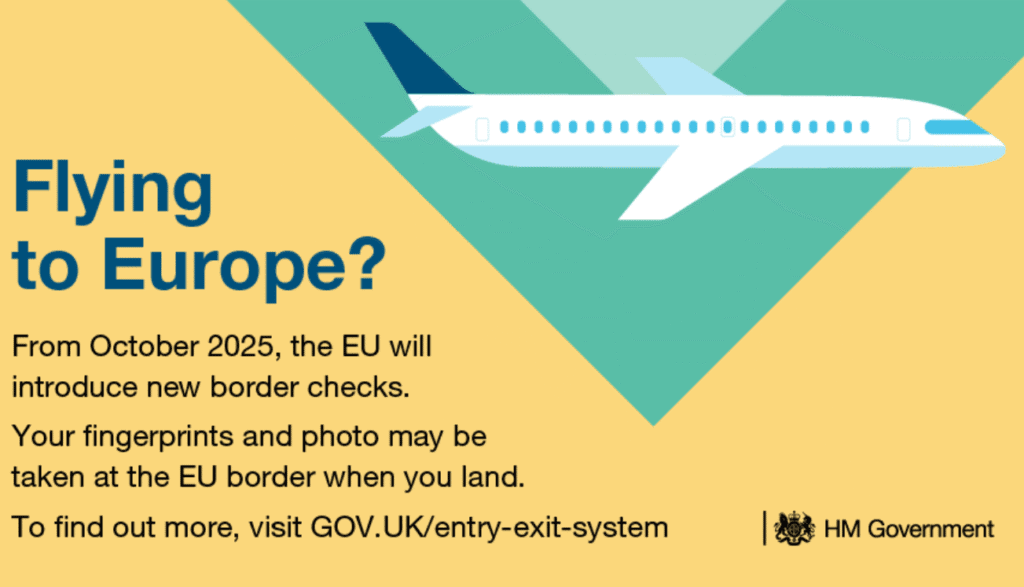
If you have any questions regarding the Schengen Area and the EU’s new Entry/Exit System coming into effect in October 2025, don’t hesitate to reach out to our team at hello@ytc.co.uk or call on 020 3805 4599